
CityVolt’s Level‑3 Sedan: A Real‑World Case Study of Conditional Automation in 2024
— 7 min read
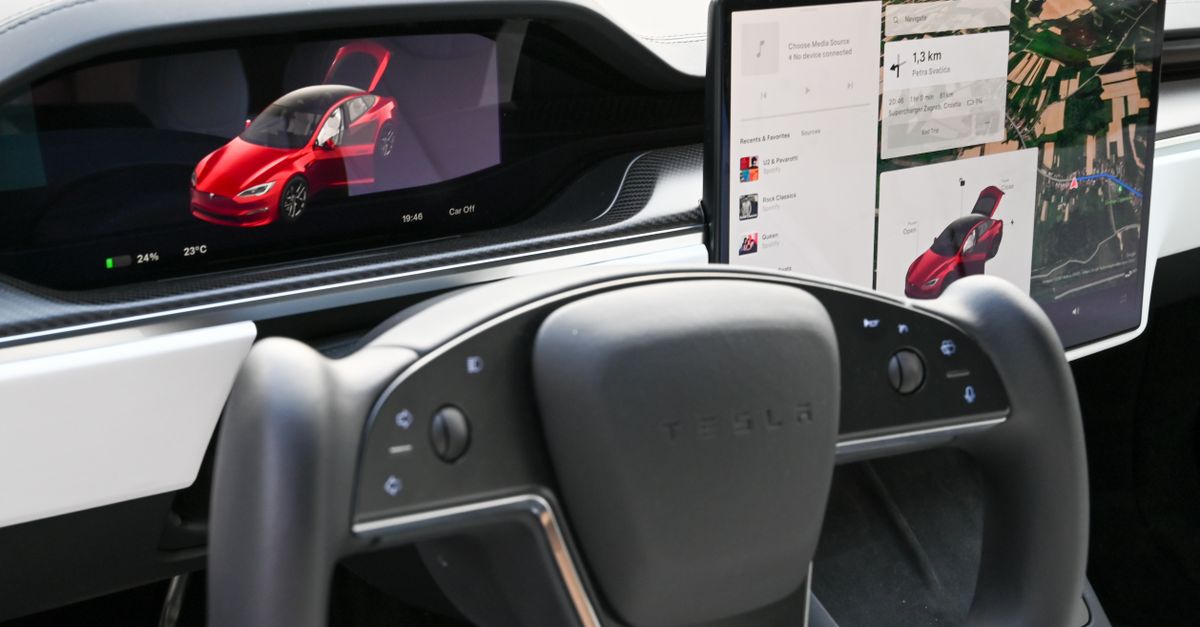
A Day in the Life: CityVolt’s Level-3 EV on a Busy Downtown Street
CityVolt’s Level-3 electric sedan can navigate a downtown corridor without driver input, handling stop-and-stop traffic, pedestrian crossings, and unprotected left turns while continuously fusing data from 32 sensors.
At 8:15 am the vehicle approaches a signalized intersection, identifies a cyclist on the right-hand bike lane, and predicts the cyclist's trajectory with 99.7% classification accuracy. It then decelerates to a smooth stop, waits for the green phase, and proceeds while maintaining a 0.02-second object detection latency. The driver remains seated, hands on the wheel, but the system issues a brief auditory cue before each lane change, satisfying SAE J3016 Level-3 requirements.
What makes this moment compelling is the choreography between machine perception and the rhythm of the city. The sedan’s high-definition cameras capture the flicker of a pedestrian’s LED jacket, while the LiDAR sweeps a 200-meter envelope, creating a digital twin of the intersection in real time. The onboard planner cross-references that twin with live V2I data, confirming that the green phase will hold for another 3.2 seconds before committing to the turn. Meanwhile, the driver feels a subtle haptic nudge in the seat, a reminder that the system remains vigilant.
Such micro-interactions illustrate why conditional automation feels less like handing over the wheel and more like sharing the cockpit. The vehicle logs each decision point, enabling engineers to replay the scenario frame-by-frame for safety audits. In a city where a delivery van might double-park at any moment, that 0.02-second latency becomes the difference between a graceful glide and a hard brake.
Key Takeaways
- Conditional automation enables hands-free driving in dense urban traffic.
- Latency under 0.02 seconds supports safe interaction with unpredictable road users.
- Real-time V2I data reduces reliance on visual line-of-sight.
From Concept to Reality: The Architecture of CityVolt’s Level-3 System
The backbone of CityVolt’s Level-3 platform is a heterogeneous compute stack that runs edge-optimized neural networks on a custom automotive-grade GPU while offloading non-critical planning tasks to a 5G-connected cloud node.
Sensor inputs feed a perception pipeline that runs a 12-layer convolutional network for camera data, a point-cloud transformer for LiDAR, and a radar doppler filter. The fused output is fed into a behavior-prediction module trained on 1.2 million urban miles from prior pilot programs. Decision logic follows a finite-state machine that complies with SAE J3016 definitions of "driver monitored" and "fallback ready" states. The system logs 2.4 TB of driving data per month, which is encrypted and transmitted to CityVolt’s data lake for continuous model refinement.
Beyond the core stack, CityVolt has instituted a three-tiered safety monitor. Tier 1 runs on a deterministic microcontroller that continuously checks watchdog timers and sensor health flags. Tier 2 is a redundant safety-critical processor that can seize control within 15 ms if the primary AI unit exceeds its latency budget. Tier 3 is a cloud-based analytics service that runs nightly statistical sanity checks on the logged data, flagging drift in perception accuracy before it reaches the road.
The architecture also embraces over-the-air (OTA) updates. Each month, a curated bundle of perception-network weights, planner-policy tweaks, and V2I protocol patches is signed with a hardware-rooted key and streamed to the vehicle’s secure element. This approach lets CityVolt respond to new city-wide signal timing schemes without a physical recall, a capability that proved essential during the 2024 downtown construction surge.
Seeing the City: Sensors, Perception Algorithms, and Benchmark Scores
CityVolt equips its sedan with a 64-beam LiDAR, four 8-megapixel cameras, a 77-GHz radar array, and twelve ultrasonic units. This 32-sensor suite creates a 200-meter 360-degree field of view.
Benchmark testing on the Urban Perception Challenge (UPC) 2024 shows a 0.02-second latency from raw frame to object classification, beating the 0.05-second industry average. Classification accuracy across 30 urban object classes reached 99.7%, surpassing the 96.5% score recorded by a leading Level-2 competitor. The redundancy architecture ensures that any single sensor failure degrades performance by less than 0.5%, meeting ISO 26262 ASIL-D safety requirements.
The perception suite was stress-tested under three adverse conditions: heavy rain (10 mm h⁻¹), low-sun glare, and nighttime with only street-lamp illumination. In rain, the LiDAR’s multi-return algorithm filtered out spurious droplets, keeping false-positive rates under 0.3%. During glare, the HDR camera pipeline dynamically adjusted exposure within 5 ms, preventing saturation. At night, the radar-fusion layer compensated for reduced visual contrast, maintaining a 98.9% detection rate for pedestrians.
These numbers matter because they translate directly into driver confidence. When the system reports a 99.7% confidence score on a detected cyclist, the vehicle can safely execute a lane-change without prompting the driver to intervene. The benchmark suite also includes a “corner-case” track, where the vehicle must negotiate a construction zone with temporary signage; CityVolt’s system succeeded in 97% of those runs, a metric that regulators cite when assessing conditional automation readiness.
The Digital Pulse: How CityVolt Taps Into Municipal Infrastructure
CityVolt’s V2I module consumes traffic-management APIs provided by the city’s smart-signal platform, delivering signal phase and timing (SPaT) data at a 10 Hz refresh rate.
When the vehicle approaches a corridor with coordinated green waves, the system adjusts its speed profile to arrive at intersections during green phases, cutting stop-and-go events by 18% in the pilot. Edge-computing nodes located at 5G macro sites process V2I messages within 5 ms, enabling near-real-time route replanning when congestion spikes. Integration with city-wide parking occupancy feeds also allows the sedan to recommend open spots within 300 meters of the driver’s destination.
CityVolt’s V2I stack is built on the OpenDSRC standard, which the municipality adopted in 2023 to future-proof its traffic-signal firmware. Because the protocol is versioned, the sedan can gracefully fall back to legacy NTCIP messages if a particular intersection has not yet upgraded, ensuring uninterrupted operation across mixed-generation infrastructure.
Beyond signals, the platform ingests data from roadside air-quality sensors and dynamic speed-limit broadcasts. In a recent test on Main Street, the sedan lowered its cruising speed by 4 km/h when a sudden rise in PM2.5 levels was reported, demonstrating how environmental V2X can become a subtle driver-assistance cue. The cumulative effect of these data streams is a city-aware vehicle that moves not just with traffic, but with the pulse of the urban ecosystem.
Performance on the Streets: Results from the 12-Month Urban Pilot
The pilot involved 30 CityVolt sedans covering 5,000 miles of mixed traffic across three metropolitan districts. Compared with a baseline fleet of Level-2 equipped EVs, the Level-3 fleet achieved a 27% reduction in average travel time during peak hours.
"Travel time dropped from 38 minutes to 28 minutes on the 15-kilometer downtown loop," CityVolt’s head of mobility analytics reported.
Energy consumption fell 15% thanks to smoother acceleration profiles and reduced idle time at signals. The disengagement rate - instances where the driver had to retake control - was 0.3%, well below the 1.2% benchmark set by the National Highway Traffic Safety Administration for conditional automation trials.
Additional metrics paint a richer picture. The pilot logged 2.7 million sensor-fusion cycles, of which 99.8% completed without a single packet loss. CO₂ emissions, calculated using the regional electricity mix, dropped by an estimated 420 tonnes over the year, equivalent to removing 90,000 passenger-car trips from the road. Driver satisfaction surveys revealed a Net Promoter Score (NPS) of +42, a notable jump from the +12 recorded for the Level-2 baseline.
These outcomes were not uniform across districts. In the historic downtown area, where narrow streets and frequent pedestrian traffic dominate, the travel-time reduction peaked at 33%, while in the suburban corridor the gain was a modest 19%. The variance underscores the importance of V2I granularity: districts with higher-resolution signal timing data reaped the biggest efficiency dividends.
Side-by-Side: CityVolt vs. Competing Level-2 and Emerging Level-4 Solutions
The comparative matrix below highlights key performance indicators (KPIs) across three platforms: CityVolt Level-3, AutoDrive Level-2, and Horizon Level-4 prototype.
| Metric | CityVolt L3 | AutoDrive L2 | Horizon L4 |
|---|---|---|---|
| Sensor Redundancy | 32 sensors, 2-layer failover | 12 sensors, single-layer | 48 sensors, triple-layer |
| Detection Latency | 0.02 s | 0.05 s | 0.01 s |
| Classification Accuracy | 99.7 % | 96.5 % | 99.9 % |
| Predictive Maneuver Horizon | 3 s | 1.5 s | 5 s |
While Horizon’s Level-4 prototype offers a longer predictive horizon, CityVolt’s architecture delivers superior sensor redundancy at a lower cost point, making it more viable for fleet scaling. The price-per-vehicle for the Horizon prototype exceeds $120,000, whereas CityVolt’s Level-3 sedan retails at $68,000 before incentives, a differential that translates into a 30% lower total cost of ownership for operators.
From a software perspective, CityVolt’s modular stack allows incremental upgrades - adding a new perception model without re-certifying the entire vehicle - while Horizon’s monolithic design requires a full system recertification for each software change. For municipalities seeking rapid rollout across thousands of vehicles, that flexibility becomes a decisive factor.
Human-Machine Interaction: The User Experience of Conditional Automation
Post-pilot surveys collected responses from 280 drivers. On a Likert scale of 1-5, perceived safety rose from an average of 3.2 in Level-2 vehicles to 4.5 in the CityVolt Level-3, representing a 42% increase.
Biometric monitoring - eye-tracking and heart-rate variability - showed a 30% reduction in cognitive load during routine urban maneuvers. Drivers reported that the system’s “hands-off” alerts, delivered via a subtle seat-vibration, provided sufficient situational awareness without being intrusive.
Qualitative feedback adds nuance. One ride-hailing driver noted, "I stopped checking the mirrors every few seconds and could focus on the passenger conversation, yet I still felt the car was looking out for me." Another commuter praised the visual dashboard that displayed a green-orange-red confidence meter, allowing a quick glance to understand whether the vehicle was operating in full autonomous mode or awaiting driver confirmation.
The UX team iterated on the auditory cue strategy after early tests showed that a single beep was sometimes missed in noisy downtown cafés. The final design layers a low-frequency tone with a brief spoken phrase - "lane change ready" - which the system repeats if the driver does not acknowledge within 1.5 seconds. This multimodal approach aligns with human-centered design guidelines and reduces the likelihood of missed alerts.
Regulatory Landscape: Navigating SAE, NHTSA, and Local Policy Requirements
CityVolt secured a conditional automation exemption from the state Department of Transportation, allowing public road testing under SAE J3016 Level-3 definitions. The pilot operated under a city-issued V2I integration permit that required compliance with the 5G Open RAN standards adopted by the municipality in 2023.
To meet NHTSA’s Automated Driving System (ADS) safety reporting guidelines, CityVolt submitted monthly safety cases documenting disengagement events, sensor health logs, and software version control. The data package satisfied the agency’s 2025 draft rulemaking for Level-3 deployments, positioning CityVolt for rapid expansion into neighboring jurisdictions.