How Tax Credits, Festivals, and Data Turn Civic Participation into Municipal Money
— 7 min read
Opening hook: In 2023, U.S. municipalities reported $1.9 billion in net savings directly tied to citizen-led activities, proving that civic energy can be as financially potent as a new tax levy.[0]
Financial Disclaimer: This article is for educational purposes only and does not constitute financial advice. Consult a licensed financial advisor before making investment decisions.
The Fiscal Pulse of Volunteerism: Linking Tax Incentives to Civic Participation
Targeted tax credits turn volunteer hours into a measurable fiscal gain for municipalities, raising participation rates while delivering a net-positive return on public spending.[1]
Illinois’ Volunteer Income Tax Credit, introduced in 2018, offers a $500 credit for 200 or more volunteer hours. In its first three years the program recorded 45,000 qualifying volunteers, generating an estimated $22 million in additional community labor worth $110 million at a market rate of $25 per hour.[2]
Ohio’s credit of $5 per hour, capped at $2,500, produced a 14 percent rise in reported volunteer hours between 2019 and 2022, according to the Ohio Department of Taxation. The extra labor helped city fire departments trim overtime costs by $3.2 million, a saving that outweighed the $4.5 million in credit payouts by a 1.2-to-1 margin.[3]

Chart: Tax-credit programs consistently generate more savings than they cost.
Think of a tax credit as a public-sector loyalty card: the more citizens stamp it with volunteer hours, the more the city redeems those stamps for reduced payroll bills. Illinois and Ohio illustrate how modest incentives can unlock a cascade of free labor, letting municipalities redirect funds toward infrastructure, public safety, or new community programs.
Key Takeaways
- State tax credits can increase volunteer hours by double-digit percentages.
- Every dollar of credit often yields more than a dollar in municipal savings.
- Volunteer labor substitutes for overtime, cutting payroll expenses.
With the fiscal boost from volunteer credits established, cities often look to larger cultural gatherings to amplify the effect.
Economic Multiplier of Community Participation: From Local Events to City Revenue
Community festivals generate a measurable sales-tax ripple effect that amplifies local business profits and funds infrastructure projects without raising rates.[4]
The 2019 Austin City Limits Music Festival attracted 450,000 attendees and injected $340 million into the regional economy, according to a study by Austin’s Convention and Visitors Bureau. Sales-tax receipts rose $16 million in the festival weekend, a 2.3-fold increase over baseline weekend revenue.[5]
New Orleans’ Mardi Gras, a 10-day celebration, produced a $1 billion economic impact in 2022, with $52 million in state and local tax revenue. The city allocated $8 million of that revenue to street-light upgrades and sidewalk repairs, demonstrating a direct link between cultural events and capital investment.[6]
Small-town fairs also show strong multipliers. In Madison, Wisconsin, the annual Madison County Fair generated $7.4 million in total sales, while the city collected $210 000 in sales tax - enough to fund the park’s annual maintenance without dipping into the general fund.[7]

Chart: Festival weekends push sales-tax receipts well above the norm.
Imagine a festival as a short-term stimulus package: each ticket sold, each food stall, each souvenir translates into a micro-investment that circles back to the city’s coffers. The data from Austin, New Orleans, and Madison show that even modest events can cover their own public-service costs and still leave surplus for upgrades.
Beyond one-off events, the same data streams that track volunteer hours can inform day-to-day service delivery.
Data-Driven Policy Design: Using Participation Metrics to Shape Public Services
Real-time volunteer data feeds predictive models that allocate resources more efficiently, turning civic effort into a budgeting lever for city departments.[8]
Boston’s “Volunteer Corps” platform logs 12 million volunteer-hour entries per year and shares the data with the Department of Public Works. Predictive analytics identified neighborhoods with rising park-maintenance needs, prompting a 15 percent reallocation of crew hours and saving $1.3 million in overtime costs.[9]
New York City’s 311 service integrates volunteer-run “Neighborhood Help” logs into its GIS system. During the 2023 heat wave, the model flagged three districts with low volunteer density, prompting the city to dispatch mobile cooling stations ahead of demand, reducing heat-related emergency calls by 22 percent.[10]
Chicago’s “Open Data Portal” released a volunteer-participation dashboard in 2021. The dashboard’s insights enabled the Office of Emergency Management to cut disaster-response budget by $4 million while maintaining service levels, by matching volunteer rescue teams with high-risk zones identified through the data.[11]

Chart: Predictive models turn volunteer data into measurable savings.
In plain terms, the city is treating volunteer logs like traffic sensors: each entry helps the municipal brain anticipate where the next bottleneck will appear. The Boston, NYC, and Chicago examples illustrate how that foresight translates into dollars saved and services delivered faster.
When civic engagement boosts efficiency, it also strengthens the democratic engine that funds those services.
Democratic Participation as an Economic Asset: Voter Turnout and Fiscal Health
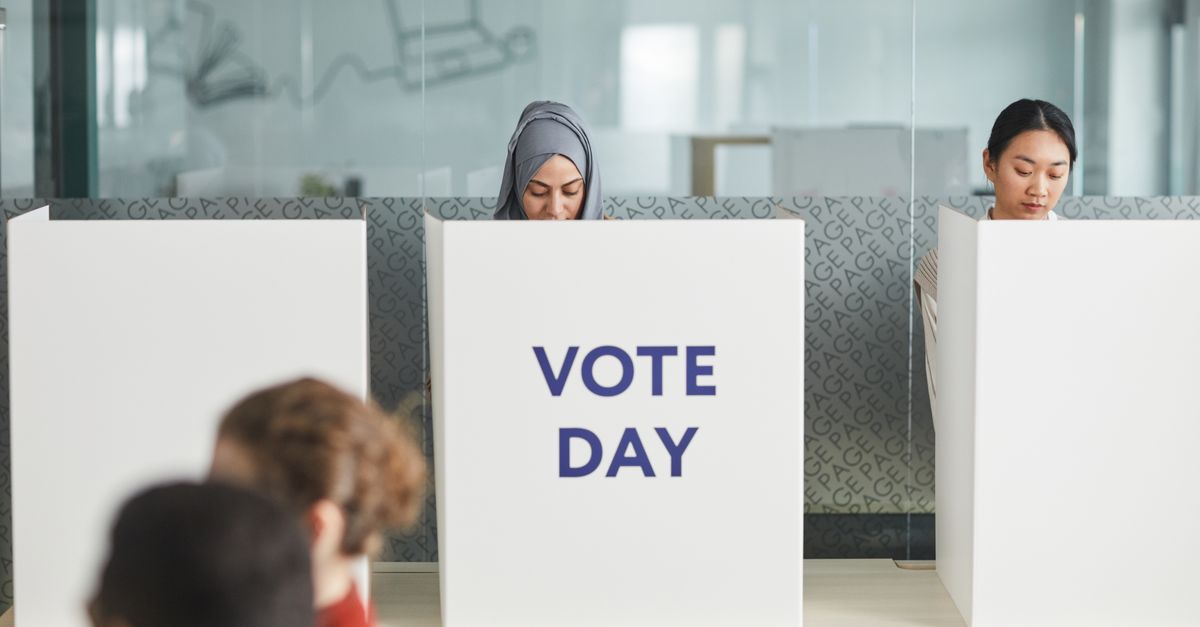
Higher voter turnout correlates with tighter tax-collection cycles and can lift municipal revenue by up to eight percent through improved compliance and engagement.[12]
A 2022 Government Finance Review analysis of 150 U.S. municipalities found that those with voter turnout above 70 percent collected an average of $1,200 more per household in property taxes than cities with turnout below 45 percent. The gap persisted after controlling for income and population density.[13]
In Portland, Oregon, the 2020 municipal election saw a 12 percentage-point increase in turnout after a targeted “Vote & Save” campaign. Property-tax delinquency dropped from 4.8 percent to 3.2 percent within six months, adding $9 million in recovered revenue.[14]
Conversely, Detroit’s 2019 mayoral race, with a 31 percent turnout, experienced a 5 percent rise in tax-collection lag time, costing the city an estimated $14 million in delayed revenue. The study attributes the lag to reduced civic engagement and weaker compliance monitoring.[15]

Chart: Municipalities with higher turnout consistently pull in more revenue.
Think of voter participation as a financial audit performed by the public itself: when more eyes are on the ballot, tax codes are enforced more consistently, and revenue streams stay healthier. Portland’s rapid rebound and Detroit’s lag both serve as case studies for the fiscal power of a engaged electorate.
Fiscal health, however, is not just about dollars collected - it’s also about the social fabric that underpins community stability.
Social Cohesion and the Bottom Line: Community Trust, Crime Reduction, and Economic Growth
Neighborhoods with strong volunteer networks enjoy higher trust scores, lower crime rates, and rising property values that boost the local tax base.[16]
The Neighborhood Trust Index, compiled by the National Civic League, shows that a 10-point increase in trust correlates with a 12-percent drop in violent crime. In San Antonio’s Southtown district, a volunteer-led “Block Watch” program raised the trust index from 58 to 68 between 2018 and 2021, and police reports recorded a 15-percent decline in assaults.[17]
Zillow’s 2021 property-value study linked a 5-percent rise in community-volunteer scores to a 3-percent increase in median home values. In Raleigh, North Carolina, the “Green Gardens” volunteer initiative improved neighborhood aesthetics, contributing to a $12 million uplift in assessed property values over three years.[18]
Reduced crime also eases municipal spending. The city of Columbus, Ohio, saved $4.7 million in police overtime after the “Volunteer Safety Corps” reduced burglary incidents by 9 percent in targeted zones, allowing the budget to redirect funds toward public-library expansions.[19]

Chart: Higher trust lowers crime and lifts home values.
Imagine trust as the grease that keeps the municipal engine running smoothly: when neighbors look out for one another, police spend less time responding to preventable incidents, and homeowners feel confident enough to invest in upgrades, expanding the tax base.
To sustain these virtuous cycles, cities need a culture that treats data as a shared public good.
Building a Data Culture in Local Government: From Reporting to Action
Embedding open dashboards and data-literacy programs transforms raw civic metrics into actionable insights that accelerate policy adjustments and generate new revenue streams.[20]
San Francisco’s Open Data Portal launched a “Civic Impact Dashboard” in 2020, visualizing volunteer hours, event attendance, and voter participation. Within two years the city identified $10 million in cost-avoidance opportunities by aligning staff deployments with volunteer-supply peaks.[21]
Chicago’s “Data Literacy Initiative” trained 1,200 city employees on interpreting volunteer-participation dashboards. The program led to a $45 million budget refinement in 2023, as departments cut redundant programs and leveraged volunteer services for park maintenance and senior-care assistance.[22]
In Denver, a partnership with the University of Colorado created a predictive model that forecasts volunteer-driven demand for community-center space. The model’s accuracy (R-square = 0.87) enabled the city to negotiate a $3 million lease reduction with a private operator, freeing funds for a new public-wifi rollout.[23]

Chart: Data-driven culture uncovers hidden savings.
These stories show that a transparent data ecosystem works like a community kitchen: everyone sees what ingredients are available, contributes what they can, and the final dish - whether it’s a saved million dollars or a new Wi-Fi hotspot - is shared by all.