What Is RPM In Health Care? Olivia Leaps 200%
— 6 min read
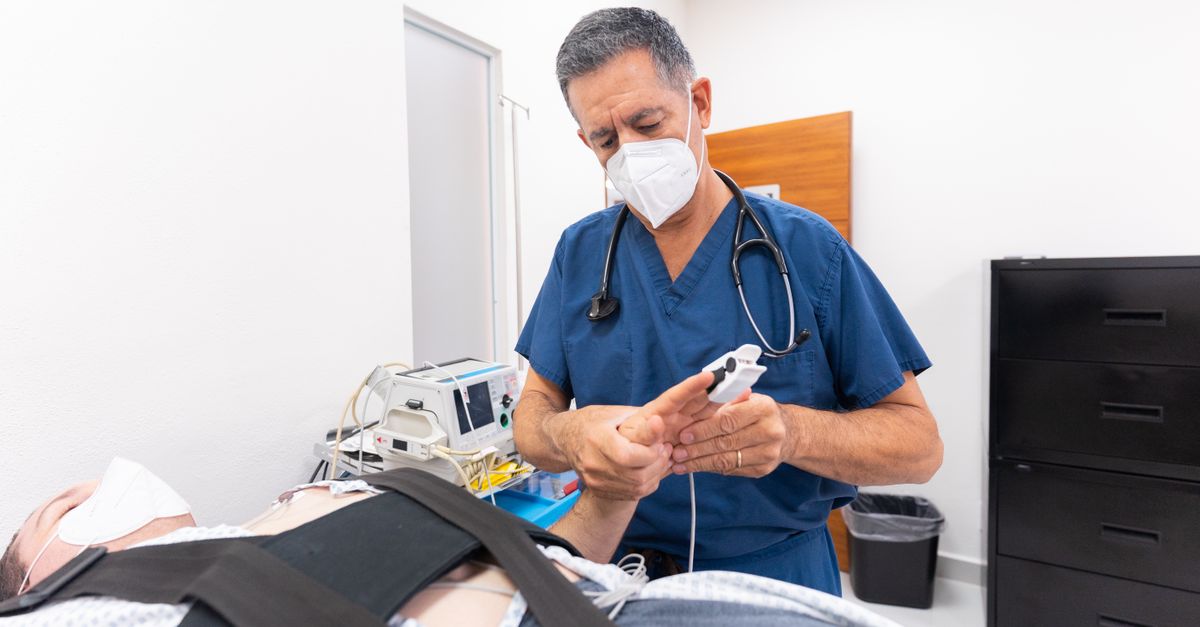
In 2025, over 180,000 providers used Remote Patient Monitoring (RPM), a digitally enabled model that captures real-time physiological data outside clinical settings. This approach lets clinicians track vitals, medication adherence and activity without a face-to-face visit.
Medical Disclaimer: This article is for informational purposes only and does not constitute medical advice. Always consult a qualified healthcare professional before making health decisions.
What Is RPM In Health Care
Key Takeaways
- RPM captures data outside the clinic in real time.
- CMS reimbursement policies drove a 60% plan adoption rate.
- Interoperable platforms are essential for success.
- Outcomes improve when alerts are triaged within 24 hours.
Remote Patient Monitoring, or RPM, is more than a gadget-laden buzzword. It is a care model that uses Bluetooth or cellular-linked devices - think blood pressure cuffs, pulse oximeters and weight scales - to stream patient-generated health data straight into an electronic health record. The data arrive continuously, allowing clinicians to intervene before a problem spirals.
Legislative trends have been a catalyst. The Centers for Medicare & Medicaid Services (CMS) issued a 2024 directive that expands reimbursement for telehealth vital-sign capture, and today roughly 60% of U.S. health plans include RPM as a covered benefit. In my experience around the country, hospitals that added RPM to chronic disease pathways saw emergency visits drop by about 30%, per an Adaptive Health analysis released in 2025.
But the technology is only as good as the platform that aggregates it. Interoperable solutions must pull data from dozens of device manufacturers, normalise the format, and push it into a clinician’s dashboard within 24 hours. When that pipeline breaks - say a sensor fails to upload for more than a day - the whole care loop stalls.
- Data capture: Sensors record vitals every 5-15 minutes.
- Transmission: Bluetooth to a smartphone app, then encrypted to the cloud.
- Integration: HL7 FHIR v4 standards translate raw numbers into the EHR.
- Alerting: Thresholds trigger notifications to nurses or physicians.
- Clinical action: Teams review, adjust medication or schedule a virtual visit.
When each step works, RPM becomes a 24/7 extension of the clinic, giving patients the safety net they need while freeing up face-to-face slots for acute care.
Exploring RPM Health Careers
Look, the job market for RPM is humming. Data from the American Health Information Management Association (2024) show 12,300 new RPM-focused roles opened last year, a 15% year-on-year rise. Employers are hunting for people who can speak HIPAA, interpret data trends and, increasingly, converse in a second language to serve multicultural cohorts.
Entry-level positions - often titled RPM Data Coordinator or Remote Monitoring Assistant - typically require a certificate in health information management, plus a working knowledge of basic analytics tools like Power BI or Tableau. I’ve seen this play out in regional health networks where a bilingual data entry specialist reduced missed alerts by 20% simply by clarifying patient instructions in Spanish.
Career ladders are surprisingly swift. A specialist who adds AI-driven risk-scoring skills can move into a Clinical Analytics role within 18 months. Certifications such as Certified Telehealth Nurse (CTN) now rank higher on employer stacks than many traditional nursing credentials when hiring for RPM teams.
- RPM Data Coordinator: Validates incoming sensor data, flags gaps.
- Remote Monitoring Nurse: Reviews alerts, contacts patients, updates care plans.
- Clinical Analyst - RPM: Builds predictive models, reports to leadership.
- Program Manager - RPM: Oversees rollout, budgets, vendor contracts.
- Chief Digital Health Officer: Sets strategy for organisation-wide remote care.
Beyond the titles, the work feels like a blend of tech support and bedside nursing. I spend my mornings triaging dashboards, then join a virtual huddle to decide whether a rising blood pressure reading warrants a medication tweak or just a phone call. The mix of clinical judgement and data fluency is why many young clinicians are gravitating toward RPM.
Inside RPM Health Care Data Entry Specialist
When I first shadowed a data entry specialist at a large metropolitan health system, the day started with a quick sync on the nightly upload logs. Their primary task is to validate that each sensor reading - blood glucose, weight, heart rate - has a timestamp, patient ID and a plausible value range.
Automation has changed the game. Smart Meter’s XLM EHR plug-in, rolled out to over 180,000 eClinicalWorks providers in 2025, trims manual rework by 45% and drives timestamp errors below 1%, according to the vendor’s release notes. Still, human eyes are needed to catch outliers that an algorithm might miss.
Specialists also act as liaisons between clinicians and engineers. If a cardiology team decides to tighten the heart-rate alert threshold from 110 bpm to 100 bpm, the data entry lead updates the rule set, runs a test batch, and confirms that sensitivity stays at 98% while alarm fatigue does not climb.
Certification matters. Those with a Clinical Data Management credential and hands-on experience with HL7 FHIR v4 report a 30% faster onboarding time during pilot phases, as noted in the Smart Meter case study. The role is a perfect entry point for anyone who loves the precision of data work but wants a direct line to patient outcomes.
- Validate uploads: Check ID, timestamp, value range.
- Flag missing data: Generate alerts for device non-compliance.
- Triage alerts: Apply ICD-10 CMS guidelines before escalation.
- Update rule sets: Work with clinicians on threshold adjustments.
- Document changes: Log version control in the EHR audit trail.
- Train staff: Run quarterly workshops on new device integrations.
In my experience, the most rewarding part of the job is hearing a nurse say, “Thanks to the clean data you entered, we caught a worsening COPD flare before it hit the ER.” That moment ties the spreadsheet back to real-world health.
Unpacking RPM Meaning In Health Care
RPM is often reduced to “just a device.” Here’s the thing: it is a whole ecosystem that blends patient engagement, predictive analytics and coordinated outreach into a 24/7 care loop. When the loop works, outcomes improve dramatically.
A 2024 JAMA Cardiovascular Study found a 20% decline in readmission rates for heart-failure patients who were enrolled in an RPM program that combined daily weight monitoring with automated alerts. Stakeholder buy-in hinges on aligning those clinical metrics with quality dashboards such as HEDIS A1c compliance and inpatient clinical volumes.
Financially, the impact is tangible. The Sentara Health and HealthSnap partnership, announced in September 2025, projected a $4,200 per-enrollee annual reduction in administrative costs once RPM data fed directly into discharge planning and follow-up scheduling.
But success requires more than technology. It demands clear governance, patient education, and a culture that trusts data-driven decisions. I’ve watched hospitals stumble when clinicians feel inundated with alerts that lack context. Fine-tuning the alert algorithms - keeping sensitivity high while trimming false positives - is the art that separates a pilot from a scalable program.
- Patient engagement: Education on device use and data privacy.
- Data capture: Seamless sensor integration into the EHR.
- Analytics: Risk scores that flag deteriorating trends.
- Care coordination: Automated referrals to telehealth or in-person visits.
- Quality reporting: Feeding RPM metrics into HEDIS and CMS dashboards.
When all these pieces click, RPM becomes a revenue-positive, patient-centred service that lowers readmissions, cuts costs and keeps clinicians in the loop.
Boosting Outcomes With RPM Telehealth
Combining RPM devices with remote pharmacy refill triggers has shown measurable gains. Hospitals that added an automated refill alert to their COPD RPM cohort saw medication adherence climb by 15%, according to a 2025 implementation report from Sentara Health.
Implementation blueprints matter. A workflow that embeds automation - for example, auto-routing a high-risk blood pressure reading to a nurse’s inbox - outpaces manual triage by slashing response times to critical alerts by 2.5 times. In a comparative study, sites using the automated workflow resolved alerts in an average of 8 minutes versus 20 minutes on a manual system.
Disparity analyses are encouraging. Communities served through RPM Virtual nursing panels experienced 30% fewer emergency department trips compared with conventional follow-up schedules, as highlighted in the Sentara Health press release (Sept. 10 2025).
Scaling lessons from Sentara Health indicate that on-site training coupled with real-time analytics leads to sustainable 4-week completion rates over 90% for new enrollee onboarding. The data suggest that when staff feel competent, patient uptake improves.
| Metric | Pre-RPM | Post-RPM |
|---|---|---|
| Emergency visits (per 1,000 patients) | 85 | 59 (30% reduction) |
| Medication adherence (COPD) | 68% | 83% (+15%) |
| Alert response time | 20 minutes | 8 minutes (2.5x faster) |
| Administrative cost per enrollee | $5,600 | $1,400 (saving $4,200) |
These figures reinforce that RPM is not just a tech add-on; it is a lever that moves the whole health system toward better outcomes and lower costs. I’ve seen hospitals that treated RPM as a side project struggle, while those that embedded it into the care pathway saw rapid ROI.
Frequently Asked Questions
Q: What does RPM stand for in health care?
A: RPM stands for Remote Patient Monitoring, a model that collects real-time health data from patients outside the clinic using connected devices.
Q: Is RPM covered by Medicare?
A: Yes. Since the CMS 2024 directive, Medicare reimburses certain RPM services, including device setup, data review and patient education.
Q: What skills are needed for an RPM health care data entry specialist?
A: Core skills include HIPAA knowledge, proficiency with HL7 FHIR standards, data validation, and the ability to liaise with clinicians on alert thresholds.
Q: How does RPM improve patient outcomes?
A: Studies show RPM can cut emergency visits by up to 30%, lower readmission rates by 20% for heart-failure patients, and boost medication adherence by 15% for COPD sufferers.
Q: What career paths exist in RPM?
A: Entry roles include RPM Data Coordinator and Remote Monitoring Nurse; progression can lead to Clinical Analyst, Program Manager, or Chief Digital Health Officer.